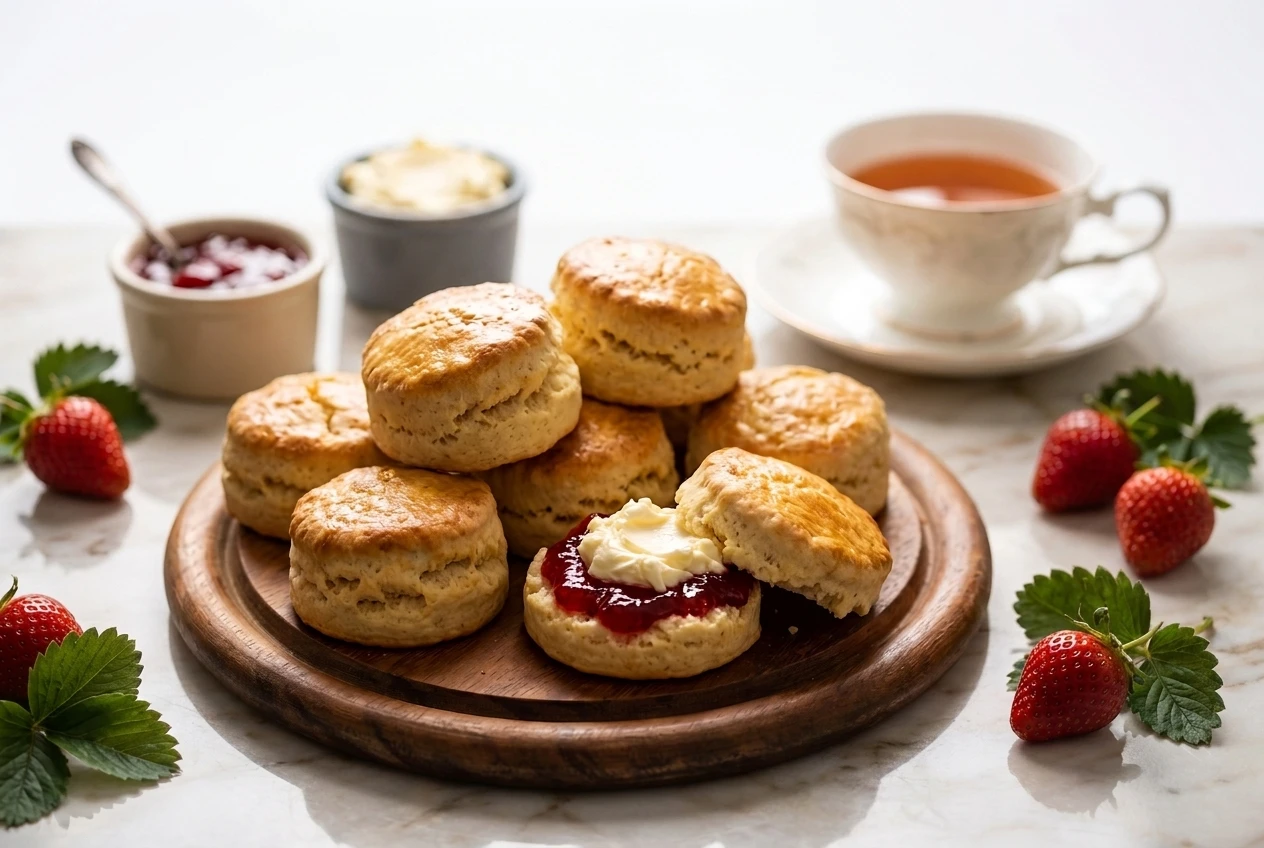
It's Afternoon Tea Week (10th to 16th August), which means scones are currently being debated with more passion than most general elections. Jam first or cream first, we'll leave that argument to Devon and Cornwall.
What we're more interested in is the cup sitting next to the scone. Tea is around 98% water, and for something most of us drink several times a day without a second thought, there's a surprising amount going on in there.
Is Britain really the biggest tea-drinking nation?
Not quite, and this one tends to surprise people. Despite the reputation, the UK isn't actually the world's top tea drinker per person. That title tends to go to Ireland, with Turkey often mentioned in the same breath, leaving Britain trailing in third. We still get through roughly 100 million cups a day between us though, so it's not exactly a quiet effort.
How many types of tea are there, really?
All "true" tea, meaning it actually comes from the Camellia sinensis plant, falls into six main types: white, green, yellow, oolong, black and pu-erh. The only real difference between them is how much the leaves are oxidised, from barely at all for white tea to fully for black. Fruit and herbal infusions, whatever the box calls them, aren't technically tea at all, since they don't come from that plant.
Where did afternoon tea actually come from?
Blame, or thank, Anna Maria Russell, the 7th Duchess of Bedford. In 1840, fed up with the long gap between a light lunch and a fashionably late dinner, she started having tea, bread and cake brought to her room around 4pm. She began inviting friends to join her, and what started as one peckish duchess turned into a national institution, complete with finger sandwiches, scones with clotted cream and jam, and enough cake to make the gap between lunch and dinner feel entirely reasonable.
Tea or coffee: which does Britain actually drink more of?
It's closer than you'd think. Britain gets through around 100 million cups of tea a day against roughly 98 million cups of coffee, so tea keeps its crown, but only just. Black tea remains the clear favourite, making up around 85% of everything we drink, which is why Earl Grey and English Breakfast still dominate the tin.
What temperature should the water actually be?
It depends what's in your cup, which is something a lot of kettles don't account for. Delicate teas like white and green need cooler water, somewhere around 70 to 85°C, since boiling water scorches the leaves and drags out bitterness rather than flavour. Black tea and pu-erh are the opposite: they're robust enough to want water close to boiling, since anything cooler leaves the flavour underdeveloped. Oolong sits in the middle, needing warm water and a bit of neither extreme.
Milk first or last? Science versus tradition
Genuinely, both sides think they've won this one. In 2003, the Royal Society of Chemistry weighed in and sided with milk first, on the basis that pouring hot tea straight onto cold milk denatures the proteins unevenly, which can leave a faint off-taste. Buckingham Palace, on the other hand, does it the other way round, tea first, milk added last, a habit that apparently dates back to when only the wealthy could afford china sturdy enough to take boiling water without cracking. So: science says one thing, royal tradition says another, and everyone else just does whatever their nan taught them.
Why your water matters as much as your tea
Here's the bit that tends to get overlooked. Tea is around 98% water, so whatever's in your tap ends up in your cup, whether you notice it or not. Chlorine's smell and taste are usually faint enough to miss in a glass of water on its own, but tea concentrates everything around it, which is exactly why it can clash with more delicate, aromatic blends.
"Chlorine's flavour is subtle enough to go unnoticed in a plain glass of water, but tea has a way of magnifying whatever's around it. In something like Earl Grey, where the whole point is tasting the bergamot, even a small trace of chlorine can compete with those top notes rather than let them come through," says Genevieve Upton, Our Taap's Head of Filtration.
Hard water tells its own story too, and it's one Genevieve sees play out in cups all over the country. "The quality of your water can also affect the visual appeal of your tea or coffee, as hard water can facilitate the precipitation of polyphenols from the tea. That can make it look cloudy or hazy, and cause a scum to form on top," she explains.
"The quality of the water can also affect the life expectancy of your kettle or heated appliance, through the creation of limescale, which can inadvertently end up in your tea and affect both taste and appearance."
None of this means you need to overhaul your tea routine. It's more that a decent cup of tea really starts before the kettle even goes on, with the water you're using in the first place.
Curious to learn more about your tap water? Find your water hardness score and full quality breakdown with our postcode checker.
Sources:
*UK Tea and Infusions Association, Royal Society of Chemistry